New RSV treatments to protect those at high risk
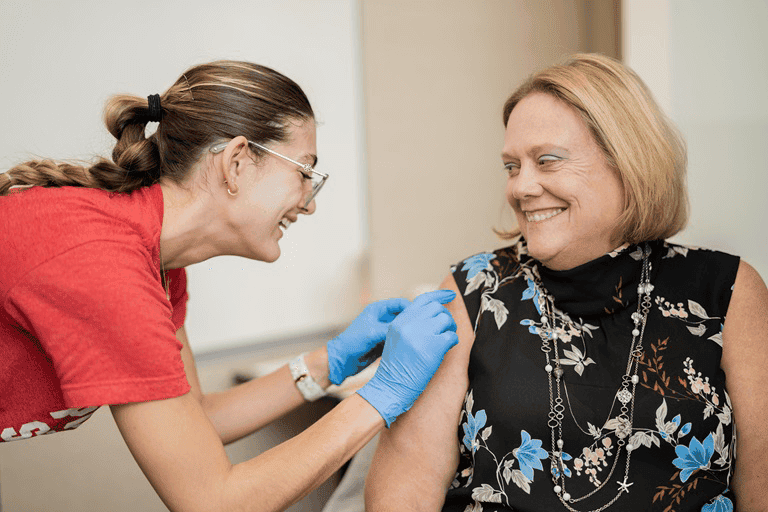
Three immunizations are available this cold and flu season to help those most at risk of serious complications due to respiratory syncytial virus, commonly known as RSV. These preventive measures can reduce the risk of severe RSV disease by up to 80 percent, according to the Centers for Disease Control and Prevention (CDC).
RSV is a common respiratory virus that typically causes mild cold-like symptoms. Most people recover within a week or two, but infants, young children and older adults are at a higher risk of developing severe RSV symptoms that may require hospitalization.
Everyone can reduce the risk of getting and spreading RSV. Here’s how:
- Stay home from work if you are sick and keep children home from school if they have symptoms.
- Cover your mouth when you cough or sneeze.
- Wash your hands frequently and thoroughly.
- Avoid touching your face.
- Avoid close contact with others.
- Clean high-touch surfaces often (doorknobs, mobile devices, etc.).
What are the new RSV treatment options?
These treatments have been approved by the U.S. Food and Drug Administration (FDA) and recommended by the CDC for protection against RSV in high-risk groups.
- BeyfortusTM is a long-acting monoclonal antibody that helps to prevent severe RSV in newborns and infants born during or entering their first RSV season. The drug also is available for children up to 24 months of age who remain vulnerable to severe RSV.
- Arexvy is a vaccine approved for the prevention of lower respiratory tract disease caused by RSV in people 60 years of age and older.
- AbrysvoTM is a vaccine approved to prevent lower respiratory tract disease caused by RSV in people 60 years of age and older and for use in pregnant individuals to prevent severe RSV in infants from birth through six months of age.
RSV treatments for infants and young children at high risk
How does Beyfortus work?
Beyfortus, whose generic name is Nirsevimab, contains monoclonal antibodies — man-made proteins that protect against RSV. The protection is similar to a vaccine, but instead of activating a person’s immune system, external antibodies are delivered to fight the illness.
Beyfortus is administered as a shot into the thigh muscle, and a single dose (one shot) is recommended during the RSV season. One dose protects infants for at least five months—the length of an average RSV season.
Who should get Beyfortus?
- All infants younger than eight months of age who are born during the RSV season or entering their first RSV season should receive Beyfortus. For infants born during the RSV season, Beyfortus should be given within one week of birth, and those born outside of the RSV season should have Beyfortus before the start of their first RSV season.
- Infants and young children ages eight through 24 months who are at increased risk of severe RSV should receive Beyfortus shortly before the start of their second RSV season.
Questions about coverage?
In myWellmark, you can see exactly what types of services or drugs are covered by your plan, including preventive care, immunizations and vaccines.
How does Abrysvo protect infants?
The CDC recommends Abrysvo for pregnant people who want to protect their newborn from severe RSV illness. In fact, the new vaccine has been shown to reduce the risk of RSV hospitalizations by more than half for babies in the first six months after they are born. The vaccine is recommended for those who are pregnant and will give birth during RSV season. It should be administered during weeks 32 through 36 of pregnancy to maximize protection for babies after birth.
Most infants will likely only need protection from either the maternal Abrysvo vaccine or the Beyfortus immunization. If a baby is born less than two weeks after maternal vaccination, a doctor may recommend the baby also receive Beyfortus.
RSV treatments for adults age 60 years and older
Adults age 60 and older are encouraged to talk with their health care provider about getting one of two RSV vaccines — Arexvy or Abrysvo — to protect against serious RSV illness. Both vaccines are given as a single dose and provide protection against RSV for at least two winter seasons.
How effective are Arexvy and Abrysvo?
- According to the CDC, Arexvy is more than 80 percent effective at protecting against RSV-related lung infections in the first RSV season after vaccination. It is more than 50 percent effective at protecting against such infections in the second RSV season.
- Abrysvo is 89 percent effective during the first RSV season after vaccination. It continues to protect older adults from lung infections in the second season after vaccination but final results of its effectiveness have not yet been released.
Before scheduling a vaccine appointment, register or log in to myWellmark® for your specific plan coverage information.